Name short
EN
Color
#083862
  • Speech - Ethical Boundaries and Integrity Assurance: A Fundamental Condition of the Profession

    English

    Distinguished President of the Ordem dos Revisores Oficiais de Contas,

    Honored guests, ladies and gentlemen,

    It is a great pleasure to join you today – although, unfortunately, not in person as I would have very much liked – in the beautiful city of Porto.

    Allow me to begin by thanking the OROC, through its President, Dr. Virgílio Macedo, for the kind invitation, and to congratulate OROC for the rich and timely program that brings us together today. It is a privilege to take part in this important conversation.

    Ladies and gentlemen,

    Let me reflect on three major challenges that are transforming the auditing profession.

    First, the current geopolitical context is acting as a real stress test on the foundations of ethics across all professions.

    We are moving from a period of regulatory expansion - which began with the post–financial crisis strengthening and more recently extended to areas such as technology and sustainability - to a period increasingly marked by simplification, deregulation, lighter supervision, and global fragmentation.

    This shift is shaping narratives that question the value of ethics, of long-term strategies, and of sound governance principles.

    Some organizations – including companies – argue that ethics, long-term sustainability, and a multidimensional approach to governance have gone too far and now constitute a burden. For those who think this way, this is an opportunity to remove any “constraints” that might limit or delay profit generation.

    These dynamics are not abstract. The fragmentation of capital markets and regulatory approaches is a tangible reality, reinforced by divergent national and regional strategies. And fragmentation, as we know, can weaken consistent practices in regulation, governance, and supervision.

    We are, therefore, living through a period of intense policy experimentation. Many decisions are being made whose full consequences only time will reveal – and some are even moving in opposite directions.

    Take the case of Europe. The so-called “Sustainability Omnibus Directive” seeks simplification but risks weakening the transparency and accountability momentum built through the CSRD.

    By exempting almost 80% of the companies initially expected to report, this change could erode trust and reduce the flow of information on which investors, regulators, the financial system (particularly banking), and society at large depend.

    At the same time, as announced in Lisbon last month during the first IESBA Conference, the European Commission decided to launch a public consultation on ways to strengthen the coherence of audit oversight and assess the balance between national discretion and convergence - with a clear goal: reducing fragmentation and improving efficiency.

    We are thus living in challenging and uncertain times.

    Simplification is most welcome, but it cannot turn into dilution. Clarity and efficiency must strengthen - not replace - ethical responsibility. It is important that, in the decisions we make today, we do not lose focus on cooperation and the sustainable success of businesses and organizations.

    *

    The second major challenge I wish to highlight is the profound impact of artificial intelligence and technological developments.

    Audit firms are deeply focused on AI’s transformative potential, striving to keep up in every possible way - sometimes struggling to fully understand and manage its consequences.

    Given the scale and speed of change, such difficulties are natural.

    But success will not be measured merely by the adoption of AI or other technologies. In fact, even if firms overcome the technological challenge, they will fail if they do not simultaneously drive the ethical, cultural, and governance transformation that this new reality demands. Only by advancing on both fronts - technological and ethical - can innovation generate sustainable success.

    AI raises profound ethical questions, affecting fundamental principles of the IESBA Code - integrity, objectivity, professional competence, confidentiality, and professional behavior.

    It is therefore crucial that organizations foster environments where professionals can exercise sound judgment, supported by exemplary leadership, clear accountability, and dedicated ethical resources.

    AI is also accelerating structural and strategic change within firms. The growing presence of private equity investment in accounting and audit firms - enabling the significant capital required for technological capability - introduces new ethical risks for professionals and new threats to firms’ independence.

    These require robust governance systems capable of withstanding and responding to disruptions and threats accompanying changes in ownership, business, and operational models.

    I am speaking of risks, but AI, technology, and external capital also bring extraordinary opportunities.

    Audit and accounting professionals are uniquely positioned to ensure that these serve the public interest, applying professional judgment and ethical principles to guide their responsible use.

    In short, geopolitics, technology, and culture are converging forces. They should not be seen as threats that paralyze us. Geopolitical, technological, and economic pressures can act as catalysts - driving transformation and even reinvention - of firms and professionals alike. Such transformation must be supported by the right organizational cultures.

    *

    This brings me to the third challenge, perhaps the most essential one: the need to cultivate strong ethical cultures in the face of the formidable transformations we are experiencing.

    For any audit firm, its ethical culture will ultimately determine its success or failure - depending on how clients, employees, regulators, investors, and the public perceive it as trustworthy and reputable.

    The strongest cultures are those where ethics are embedded in leadership practices and supported by effective governance mechanisms. Values alone are not enough; governance is the architecture that sustains ethics. Without it, values remain mere intentions.

    It is therefore essential that firms use all available resources to build, assess, and continuously reinforce their ethical culture.

    This means linking performance evaluations, promotions, and leadership appointments to ethical behavior – demonstrating that values, not just results, matter.

    It means promoting open conversations between leaders and teams, across all service lines,  particularly by creating psychological safety that allows ethical concerns or failures to be raised early. This is the best way to prevent crises.

    And it means remembering that culture does not live in codes or slogans. Culture is what people do when no one is watching – instinctively and fully embedded in practices and decisions. That is where ethics truly resides.

    It is also important to recognize that ethical culture does not depend solely on the “tone from the top,” but also on the echoes from the middle of the organization. Middle managers play a vital role: they shape behaviors through example and daily proximity to their teams.

    The relevance of this topic is reflected in the IESBA’s work plan through a major project on Culture and Governance in Firms.

    Its first output will be a set of high-level, outcome-oriented principles addressing eight core elements necessary to build and maintain an ethical culture and good governance in audit firms.

    These principles aim to support firms in developing consistent and adaptable systems, ensuring that ethics remains the profession’s guiding compass in a rapidly evolving environment.

    Ladies and gentlemen,

    Ethics is sometimes seen as an accessory – something “nice to have” when the seas are calm, but a burden when the storms rise.

    But it is exactly the opposite. Ethics and independence are fundamental instruments to prevent crises – or to resolve them with minimal damage. They are, for firms and professionals alike, the foundation of credibility, sustainability, and lasting success. They are also the distinctive mark of the audit profession.

    The profession’s relevance will depend on its ability to anticipate ethical risks before they materialize. Amid all the uncertainty we face, ethics is the compass to navigate it.

    I conclude by encouraging you all to follow closely the upcoming IESBA discussions and proposals, particularly on the new principles of culture and governance in firms. The success of this project will depend on our ability to engage in open and constructive dialogue with all stakeholders, ensuring that the principles are practical, applicable, and responsive to reality.

    Thank you very much.

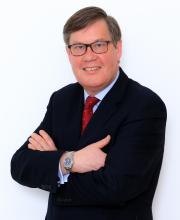
    A Speech from IESBA Chair Gabriela Figueiredo Dias before the XV OROC Congress (originally in Portuguese)

  • Article - Fighting Financial Crime: What ICAI Members Can Do and How the NOCLAR Standard Can Make a Difference

    English

    IESBA Chair Gabriela Figueiredo Dias's article in The Institute of Chartered Accountants of India's The Chartered Accountant journal, focused the crucial role of professional accountants in addressing financial crime while strengthening trust, governance, and economic resilience.

    “A robust post-implementation review, enriched with India’s perspectives, will ensure that the standard remains relevant, practical, and effective in fulfilling its core mission: enabling professional accountants to respond proactively to non-compliance with laws and regulations in the public interest."

    Download the full article below or read it on ICAI's website here.

    IESBA Chair Gabriela Figuieredo Dias opinion piece in the Institute of Chartered Accountants of India's The Chartered Accountant journal

  • Business Health Check Question Bank

    More and more, SME clients are turning to their accountants not just for compliance, but for insights, clarity, and strategic partnership as uncertainty, competition, and complexity continue to shape their business environments. As a result, many practitioners find themselves asking: “How do I move from tax and reporting to deeper advisory services without feeling like a salesperson?”

    IFAC
    SMP Advisory Group
    English
  • IFAC’s Global Investor Group (GIG) Holds Inaugural Meeting in Tokyo to Enhance Investor-Auditor Dialogue

    Tokyo / London / New York English

    The International Federation of Accountants (IFAC) convened the inaugural meeting of the Global Investor Group (GIG) in Tokyo on October 20, 2025, bringing together senior leaders from the investor community, the global accountancy profession, regulators, and capital market institutions. IFAC’s GIG aims to foster open and ongoing dialogue between the profession and investors to ensure assurance remains trusted, relevant, and aligned with the evolving needs of capital markets.

    The first meeting was graciously hosted by the Japanese Institute of Certified Public Accountants (JICPA) and held with the support of Norges Bank Investment Management (NBIM), the Japan Exchange Group (JPX)/Tokyo Stock Exchange, and under the endorsement of the Japanese Financial Services Agency (JFSA) as part of Japan Weeks 2025.

    Naruhito Minami, Chair and President of the JICPA said in his welcome address: “Dialogue between investors and auditors is not just about information exchange — it is about strengthening trust, improving audit quality, and enhancing transparency. At JICPA, we believe that providing reliable sustainability information is essential for investors to evaluate a company's long-term value creation. Consequently, the roles of auditors and the scope of dialogue between investors and auditors are expanding.

    Today’s discussions confirmed why the Global Investor Group GIG matters — the profession and investors share the same ultimate goal: trustworthy, relevant information that supports sound decision-making,” said Lee White, IFAC Chief Executive Officer. “GIG is about creating a trusted space for real dialogue between investors and the accountancy profession — open, honest, and focused on solutions. By aligning investor needs and market priorities, we can help close the expectation gap with assurance and strengthen the trust and transparency that global markets depend on.”

    This was echoed by Koji Watanabe, Director of the Listing Department, Tokyo Stock Exchange, Inc. (TSE), who added “Exchanges, regulators, auditors, and companies all share the responsibility to provide information that is accurate, timely, and useful. The Global Investor Group is a timely initiative. By working together, we can make audit reports more useful, connect sustainability information to financial statements, and build stronger partnerships in our markets. I hope today’s discussion will start a stronger partnership between investors and auditors, and help strengthen capital markets worldwide.”

    The Chief Accountant, Director for International Accounting of the JFSA, Koichiro Kuramochi noted: “Hosting such international dialogue here in Japan is not only timely, but also essential to deepening mutual understanding and collaboration with global market participants. The Japan FSA places great importance on engaging with overseas investors and stakeholders in the capital markets. We are committed to strengthening these communications further, and today’s meeting marks a significant step forward in that direction. We hope that it will serve as a foundation for future collaboration between investors and the accounting profession.”

    Jeanne Stampe, Lead Policy Advisor, Active Ownership at Norges Bank Investment Management concluded: “In an increasingly complex investment landscape, audit reports provide investors with critical insights into the judgments and assumptions underlying financial results. Alignment between investors and the auditor community will empower investors to engage effectively with board audit committees. The GIG can facilitate constructive dialogue on enhancing how audit findings reach investors, ultimately strengthening governance and supporting better capital allocation decisions.

    The meeting focused on how to help bridge the assurance expectation gap—the difference between what investors expect from assurance and what the profession delivers or is perceived to deliver. Through a structured roundtable held under the Chatham House Rule, participants explored critical questions about the role of assurance in enhancing trust, especially regarding:

    • The connectivity between sustainability-related and financial information and their assurance,
    • Audit scope, Key Audit Matters and independence,
    • Engagement with audit committees, and
    • Transparency in auditor communications.

    The GIG’s primary objective is to serve as a trusted, informal forum where investors and assurance providers can engage openly.

    In terms of next steps, input from this inaugural meeting will help shape the Terms of Reference of the GIG and its 2026 workplan, and ensure the GIG remains responsive to both investor priorities and market developments.

    About IFAC
    IFAC, by connecting and uniting its members, makes the accountancy profession truly global.

    IFAC member organizations are champions of integrity and professional quality, and proudly carry their membership as a badge of international recognition.

    IFAC and its members work together to shape the future of the profession through learning, innovation, a collective voice, and commitment to the public interest.